
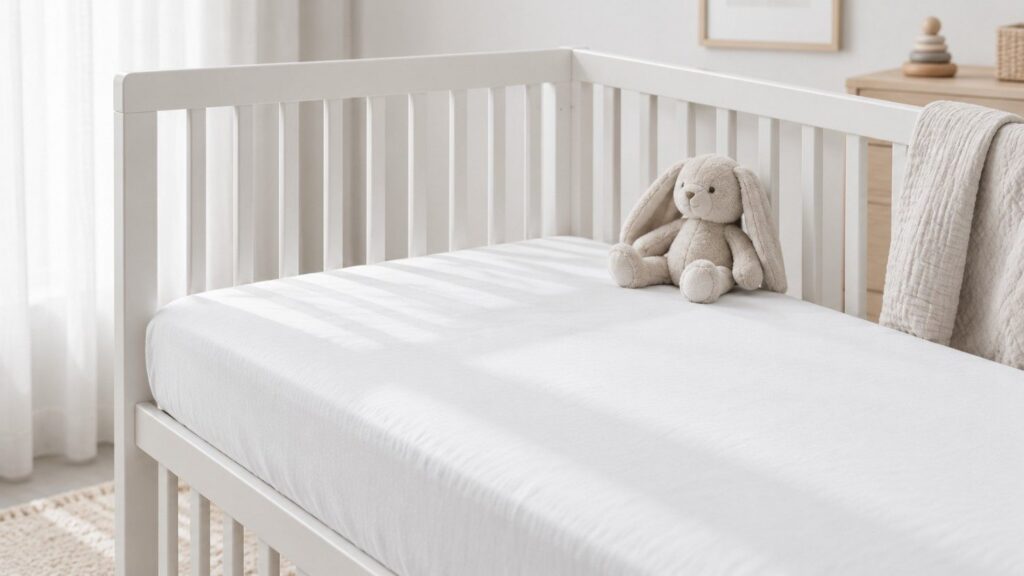
Published by U’Linen | 22 September 2026
Quick Answer: GOTS vs OEKO-TEX for Crib Sheets
GOTS certifies the organic fibre and its processing from farm to finished textile, while OEKO-TEX STANDARD 100 tests the finished fabric for harmful substances. For crib sheets, OEKO-TEX Product Class I is specifically intended for babies and toddlers up to three years old. A crib sheet carrying both certifications provides checks covering both the production process and the finished textile.
The crib sheet label says “GOTS certified” or “OEKO-TEX certified,” and you move on, because it sounds official enough. But what did you actually just check? Most parents can’t answer that, and most brands don’t explain it either.
These two labels get treated as interchangeable, and they’re not. One tells you how the cotton was grown. The other tells you what’s actually left in the finished fabric. For something that sits against your baby’s skin for most of their day, that difference is worth five minutes to understand.
Want a crib sheet that carries both certifications, not just one? U’Linen’s GOTS and OEKO-TEX certified organic cotton crib fitted sheet is built for exactly this level of scrutiny.
Shop Organic Crib Fitted Sheet →
GOTS: What It Actually Checks, Start to Finish
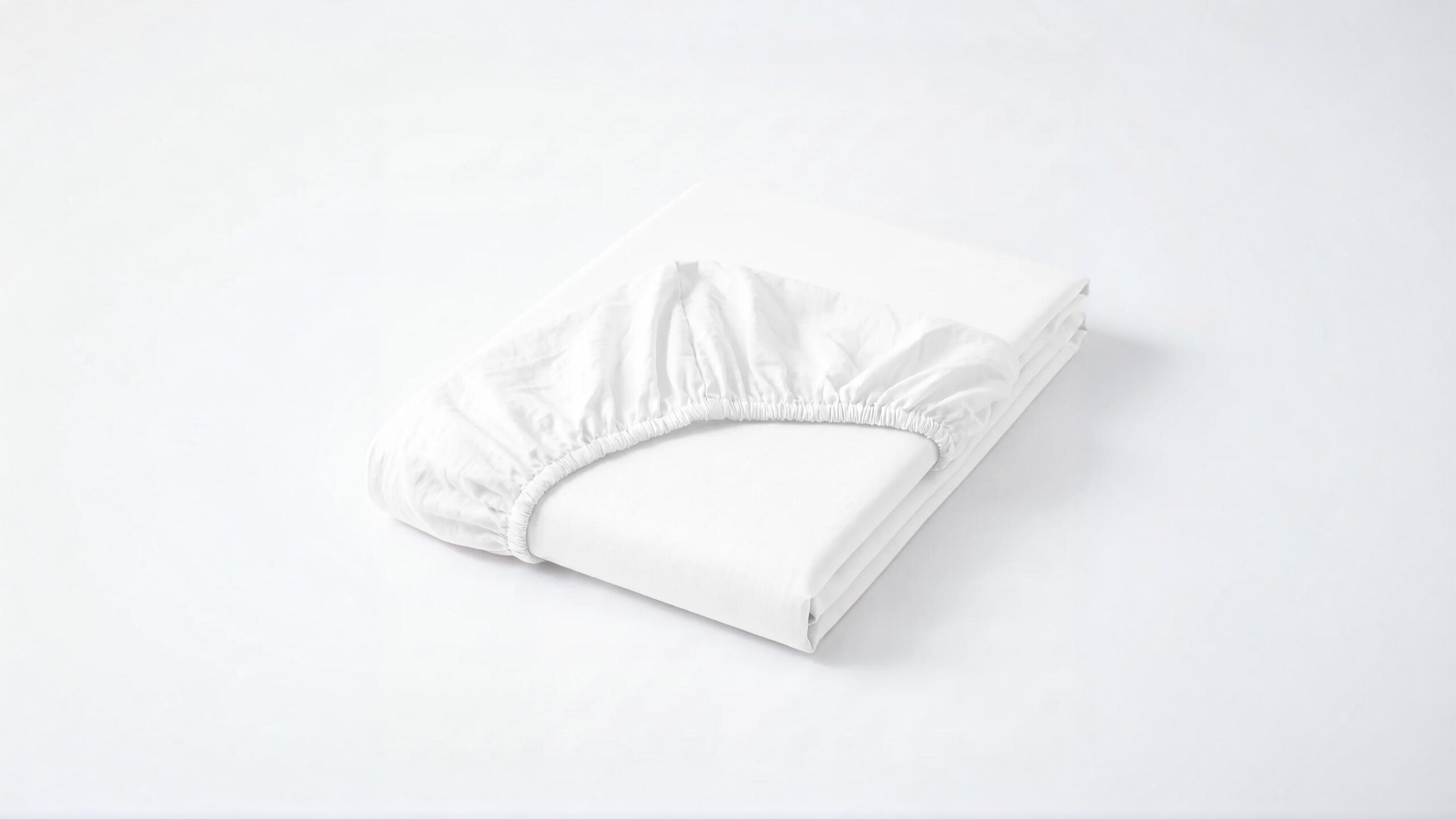
GOTS stands for Global Organic Textile Standard, and it’s a supply chain certification, not a finished-product test. It follows the cotton from the field to the final stitched sheet.
To carry the GOTS label, cotton has to be grown without synthetic pesticides, and the entire processing chain, spinning, dyeing, finishing, has to avoid formaldehyde, toxic inks and harsh bleaches.
GOTS also requires a minimum organic fibre content, either 95 per cent or higher for products labelled “organic,” or 70 per cent or higher for “made with organic” claims.
What makes GOTS meaningful rather than a self-declared claim is traceability. Every certified product carries a licence number tied back to an audited supply chain, checked annually rather than approved once and forgotten. If a brand states “GOTS certified” but can’t produce a licence number or certifying body, that claim hasn’t been independently checked.
OEKO-TEX: What It Actually Checks, and Why Class Matters
OEKO-TEX works differently. Instead of following the growing and processing history, OEKO-TEX STANDARD 100 tests the finished textile directly, screening for hundreds of substances that could be harmful, regardless of whether the fibre was organic or conventional.
This is the part most parents miss: OEKO-TEX certification isn’t one uniform standard. It’s split into four product classes based on how much skin contact a textile has and how sensitive that skin is. Product Class I is reserved specifically for babies and toddlers up to three years old, and it carries the strictest limits of any class, including tighter formaldehyde restrictions and a requirement for colour and print resistance to saliva, since babies chew and mouth fabric that older children and adults never would.
Product Class II covers general skin-contact items like adult bedding and underwear, with looser limits than Class I. A crib sheet certified only to Class II, or labelled “OEKO-TEX certified” without specifying a class, hasn’t necessarily been tested against the strictest baby-specific thresholds. When checking a certificate or product page, the class matters as much as the certification itself.
GOTS vs OEKO-TEX: How They Compare
| GOTS | OEKO-TEX STANDARD 100 | |
| What it certifies | The growing and processing of the cotton fibre | The finished, assembled textile |
| Covers organic farming | Да | Нет |
| Анализы на наличие вредных веществ | Indirectly, through process restrictions | Directly, through lab testing |
| Class system for babies | Нет | Yes, Product Class I |
| Traceability | Licence number, farm to finished product | Test report tied to the specific product |
| What it doesn’t guarantee | Chemical-free finished fabric on its own | Organic fibre sourcing on its own |
Neither certification replaces the other. GOTS confirms the fibre was grown and processed responsibly. OEKO-TEX confirms the finished sheet has actually been lab-tested and passed. A crib sheet with both is checked at every stage, from seed to the fabric touching your baby’s skin.
Why This Matters More for a Crib Sheet Than Any Other Textile
A crib sheet has more sustained skin contact than almost any other item a baby owns. Babies sleep twelve to sixteen hours a day in the first year, most of it directly against that one piece of fabric, and their skin is thinner and more permeable than an adult’s, absorbing more of whatever the fabric is carrying.
This is also the textile babies are most likely to have direct mouth contact with during rolling, hand-to-mouth exploration and general movement in the crib, which is exactly why OEKO-TEX Class I specifically tests for saliva resistance where general adult bedding standards don’t.
How to Actually Verify a Certification Claim
- Ask for the GOTS licence number and check it against the certifying body’s public database, not just the brand’s own website
- Ask specifically which OEKO-TEX product class the item is certified to, not just whether it’s “OEKO-TEX certified”
- Look for both certifications together on crib and baby bedding specifically, since either one alone only covers half the picture
- Be cautious of “organic cotton” claims with no licence number attached, since the word “organic” itself isn’t a regulated term without third-party certification behind it
Часто задаваемые вопросы
What does GOTS certified mean for baby bedding?
GOTS certifies that the cotton was grown without synthetic pesticides and processed without formaldehyde, toxic inks or harsh bleaches, with independent audits tracking the fibre from farm to finished sheet.
What does OEKO-TEX certification mean for a crib sheet?
OEKO-TEX STANDARD 100 means the finished fabric has been lab-tested for harmful substances. For crib sheets specifically, look for Product Class I, the strictest tier reserved for babies and toddlers up to three years old.
What is the difference between GOTS and OEKO-TEX for baby bedding?
GOTS certifies how the cotton was grown and processed. OEKO-TEX tests the finished fabric itself for harmful substances. They cover different parts of the process and work best together, not as substitutes for each other.
Do I need both GOTS and OEKO-TEX on a crib sheet?
Ideally yes. GOTS alone doesn’t guarantee finished-product lab testing, and OEKO-TEX alone doesn’t guarantee organic farming. Together, they cover both the growing process and the finished textile.
What is OEKO-TEX Product Class I?
Product Class I is the strictest OEKO-TEX classification, applied specifically to textiles for babies and toddlers up to three years old, with tighter chemical limits and saliva-resistance testing that general adult bedding standards don’t require.
How do I check if a GOTS or OEKO-TEX claim is real?
Ask the brand for the certification or licence number and check it against the certifying body’s records, rather than accepting the label on the packaging alone.
The Bottom Line
GOTS and OEKO-TEX answer two different questions. GOTS tells you the cotton was grown and processed responsibly. OEKO-TEX, specifically Class I, tells you the finished sheet has been lab-tested and passed the strictest limits set for baby skin. A crib sheet genuinely built for safety carries both, with verifiable licence numbers behind each claim.
U’Linen’s crib fitted sheet is GOTS certified and OEKO-TEX certified, cut from the same true 300 thread count organic cotton as our adult sheets, with a deep, all-around elastic pocket sized for standard UAE crib mattresses. Free delivery across the UAE on orders over AED 300.
Shop Organic Crib Fitted Sheet →
Related reading: What to Look for in a Crib Fitted Sheet: An Honest Guide for UAE Parents