
Introduction
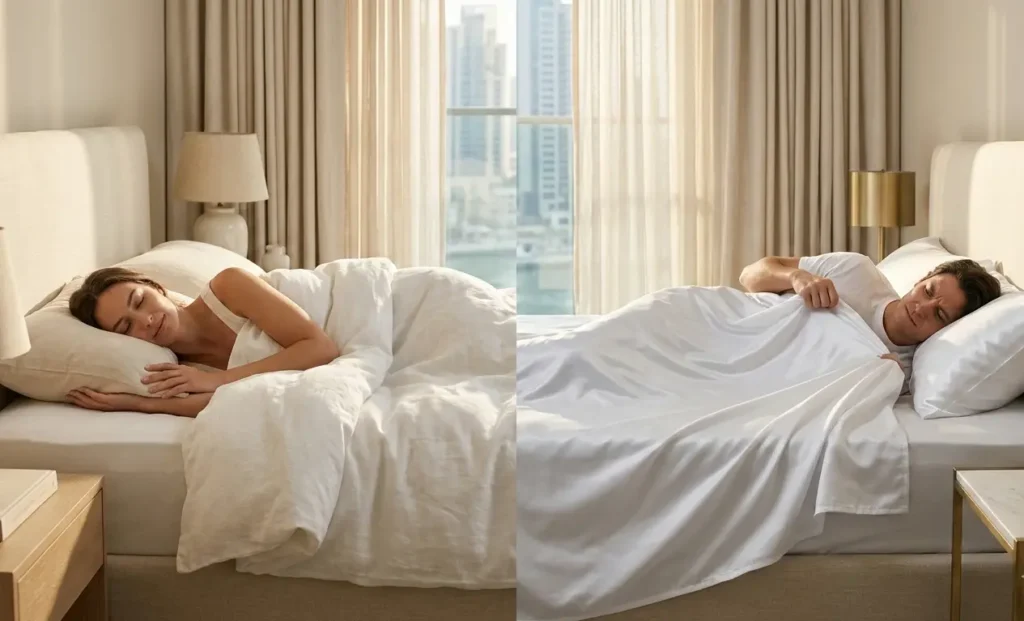
For most sleepers in the UAE’s warm and humid climate, cotton bed sheets are generally better for sleep than polyester. Cotton is a natural fiber with higher air permeability and moisture absorption, which helps regulate body temperature and reduce night sweats. Choosing quality cotton bed sheets can elevate both the comfort and style of your bedroom, transforming the space and enhancing your overall sleep experience.
Key differences:
- Cotton bed sheets: breathable, moisture-absorbing, softer over time, better for sensitive skin.
- Polyester sheets: more affordable, wrinkle-resistant, but less breathable and prone to static build-up.
- Best for hot sleepers: cooling cotton sheets designed for airflow and comfort.
There is a wide variety of cotton bed sheet options available, including different sizes, styles, and materials to suit diverse preferences and bedroom aesthetics.
For residents in Dubai, Abu Dhabi and other humid regions of the UAE, breathable natural bedding often leads to more comfortable sleep than synthetic fabrics. Percale weave is a popular choice for hot sleepers, as it feels light, airy and crisp, making it especially suitable for warm climates.
Why Fabric Choice Matters in the UAE Climate
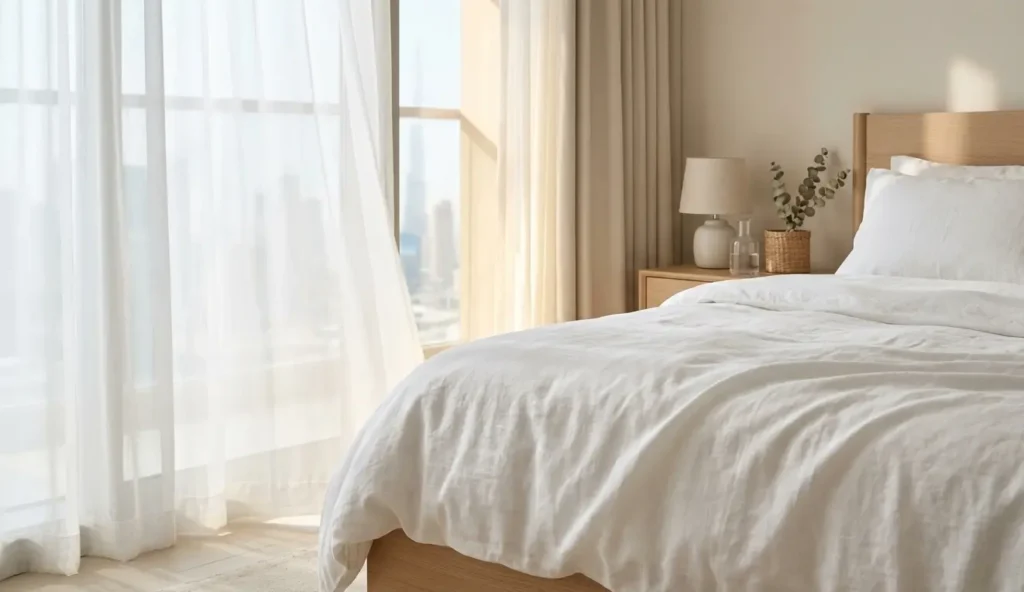
The UAE climate creates unique sleep challenges. Even with strong air conditioning, the combination of heat, humidity and temperature shifts during the night can make bedding choice extremely important.
Many sleepers experience:
- Overheating during sleep.
- Night sweats.
- Skin irritation from synthetic fabrics.
- Sheets that feel cool initially but trap heat after a few hours.
Synthetic materials like polyester are often marketed as durable and wrinkle-resistant, but they tend to retain heat and limit airflow.
In contrast, natural cotton bedding allows heat and moisture to escape, which helps maintain a stable sleeping temperature throughout the night.
For people who struggle with night sweats or humidity discomfort, breathable bed sheets are often a key part of improving sleep quality.
Cotton vs Polyester Bed Sheets: Key Differences
Understanding the structural differences between these fabrics helps explain why they behave differently during sleep.
Feature | Cotton Bed Sheets | Polyester Bed Sheets |
Fiber type | Natural plant fiber | Synthetic petroleum-based fiber |
| Breathability | High air permeability | Limited airflow |
Moisture absorption | High moisture absorption rate | Low absorption |
Temperature regulation | Good for hot sleepers | Can trap heat |
Skin sensitivity | Gentle for sensitive skin | May cause irritation |
Static build-up | Minimal | Common |
Durability | Long-lasting with proper care | Durable but may pill |
Feel over time | Becomes softer with washing | Texture remains similar |
For sleepers in hot climates like Dubai, the difference in breathability and moisture management can significantly impact comfort. Fitted sheets are designed to fit snugly onto the mattress, providing a neat and comfortable appearance.
Breathability and Temperature Regulation
One of the most important factors for sleep comfort is how well a fabric allows air to circulate.
Cotton Bed Sheets
Cotton fibers have a natural hollow structure, allowing air to move through the fabric. This creates:
- Higher air permeability.
- Better heat release.
- Reduced humidity near the skin.
Because of this, cotton is widely considered the best fabric for hot sleepers.
Cooling cotton sheets are particularly effective in climates where AC use alternates with warmer room temperatures during the night.
Polyester Sheets
Polyester is made from synthetic polymer fibers, which are tightly woven and less porous.
This results in:
- Lower breathability.
- Heat retention.
- Reduced moisture evaporation.
While polyester may feel smooth initially, many sleepers find it becomes warmer as the night progresses.
Moisture Control and Night Sweats
Humidity is one of the biggest sleep disruptors in the UAE.
Cotton and Moisture Absorption
Cotton has a naturally high moisture absorption rate, allowing it to:
- Absorb perspiration.
- Reduce dampness.
- Improve comfort for people who sweat during sleep.
Polyester and Moisture
Polyester fibers repel water rather than absorb it.
This can cause:
- Moisture to remain on the skin.
- A sticky feeling during humid nights.
- Increased discomfort for hot sleepers.
Skin Comfort: Natural vs Synthetic Bedding
Another major difference between cotton and polyester is skin compatibility.
Cotton for Sensitive Skin
Natural cotton bedding is often preferred for people with:
- Sensitive skin.
- Allergies.
- Heat rash.
- Skin irritation from synthetic fabrics.
Because cotton fibers are chemical-free when properly certified, they tend to be gentler on the skin.
Certifications like GOTS (Global Organic Textile Standard) and OEKO-TEX Standard 100 verify that fabrics are free from harmful substances.
Polyester and Skin Irritation
Polyester sheets can sometimes cause:
- Static electricity.
- Skin irritation.
- Reduced airflow around the body.
For people who sleep warm, this combination can make synthetic bedding less comfortable.
Microfiber vs Cotton Bed Sheets
Microfiber sheets are often marketed as an alternative to cotton.
Microfiber is a very fine form of polyester fiber, meaning it shares many characteristics with synthetic fabrics.
Feature | Cotton | Microfiber |
Breathability | High | Moderate to low |
| Moisture control | Good | Limited |
| Feel | Soft and natural | Smooth but synthetic |
Durability | Long-lasting | Can pill over time |
While microfiber sheets may be more affordable, they typically provide less airflow and cooling comfort than cotton.
Polyester Sheets: Pros and Cons
Polyester sheets are still popular for certain reasons.
Advantages
- Generally more affordable.
- Wrinkle resistant.
- Quick drying.
- Lightweight.
Limitations
- Reduced breathability.
- Increased static build-up.
- Can trap heat.
- May feel less comfortable in humid climates.
For cooler environments, polyester can work well. However, in hot regions like the UAE, breathable bedding often performs better.
How to Choose the Right Cotton Bed Sheets in the UAE
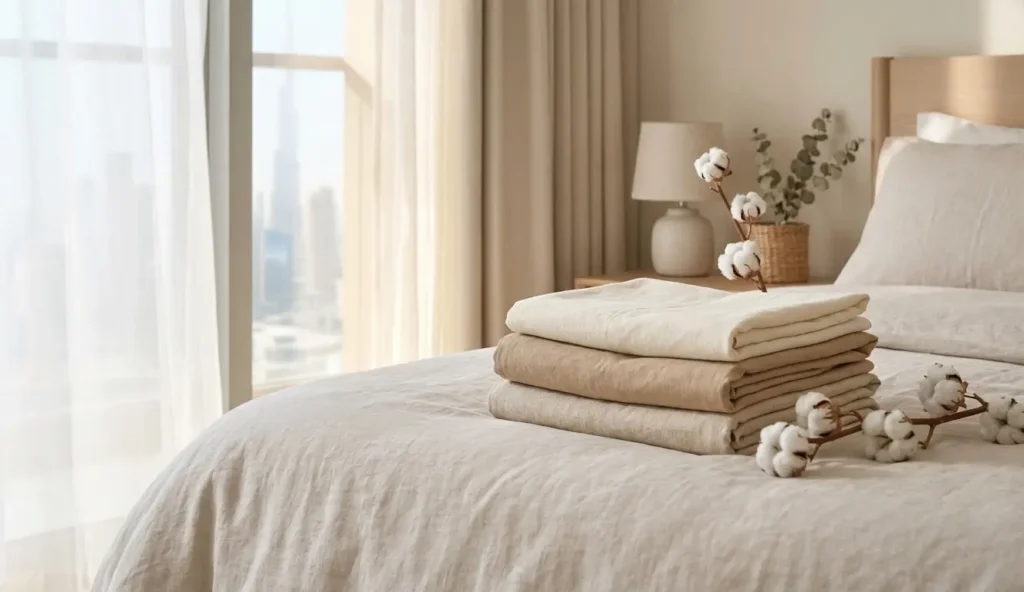
When selecting cotton bed sheets in Dubai or other UAE cities, several factors influence comfort and durability.
1. Choose Long-Staple Cotton
Long-staple cotton fibers produce:
- Stronger yarns.
- Smoother texture.
- Greater durability.
Common examples include:
- Egyptian cotton.
- Supima cotton.
- Premium organic cotton.
2. Look for Single-Ply Yarn
Many bedding products use multi-ply yarns to inflate thread count numbers.
Single-ply yarn:
- Uses longer fibers.
- Improves breathability.
- Creates softer fabric.
3. Ideal Thread Count Range
For breathable sheets in warm climates:
300–500 thread count is often ideal.
Higher numbers may indicate:
- Multi-ply yarn.
- Reduced airflow.
4. Consider Fabric Weave
Different weaves influence how sheets feel:
- Percale: crisp, breathable, ideal for hot sleepers.
- Sateen: smoother, slightly warmer.
Percale cotton sheets are often recommended for cooling cotton sheets in the UAE.
5. Check Certifications
Look for credible certifications like:
- GOTS (Global Organic Textile Standard) – certifies organic origin and responsible manufacturing
- OEKO-TEX Standard 100 – certifies the product has been tested for harmful substances.
For Dubai’s climate, single-ply construction is usually superior.
Organic Cotton vs Conventional Cotton
Another factor buyers consider is whether sheets are organic.
Feature | Organic Cotton | Conventional Cotton |
Farming methods | No synthetic pesticides | May use chemical inputs |
Chemical exposure | Lower | Higher during processing |
Certification | GOTS certified | Usually not certified |
Environmental impact | Lower | Higher |
Organic bedding appeals especially to eco-conscious buyers and people with sensitive skin.
Why Breathable Bedding Matters for UAE Sleep
In climates where nighttime temperatures remain warm and humidity fluctuates, bedding materials play a significant role in sleep quality.
Breathable natural fabrics help:
- Maintain a stable body temperature.
- Reduce night sweats.
- Improve airflow around the body.
- Support deeper, more comfortable sleep.
While polyester sheets remain popular for affordability, many sleepers find that cotton bed sheets provide better long-term comfort in warm environments.
For those looking to upgrade their sleep setup, certified organic cotton bedding designed for breathable comfort can be a worthwhile investment. To complete your bedding ensemble, consider choosing matching or coordinating cotton bed sheets for a cohesive and comfortable sleep environment
FAQs (Frequently Asked Questions)
Are cotton bed sheets better for hot sleepers?
Yes. Cotton sheets have higher breathability and moisture absorption compared to polyester, which helps regulate body temperature and reduce overheating during sleep.
Do polyester sheets make you sweat more?
Polyester does not absorb moisture well and can trap heat, which may increase sweating for some sleepers, especially in humid climates.
What thread count is best for cotton bed sheets?
A thread count between 300 and 500 is typically ideal. Higher thread counts are sometimes created using multi-ply yarn, which can reduce breathability.
Are microfiber sheets cooler than cotton?
Microfiber sheets are made from polyester fibers and usually provide less airflow than cotton. Cotton sheets generally feel cooler and more breathable.
Are cotton sheets good for sensitive skin?
Yes. Natural cotton fibers are gentler on the skin and less likely to cause irritation compared to synthetic fabrics.
What is the best bedding fabric for the UAE climate?
Breathable fabrics like cotton, linen, or organic cotton are typically the best choices for hot and humid climates.
Do cotton sheets last longer than polyester?
High-quality cotton sheets made with long-staple fibers and single-ply yarn can last many years and often become softer with repeated washing.